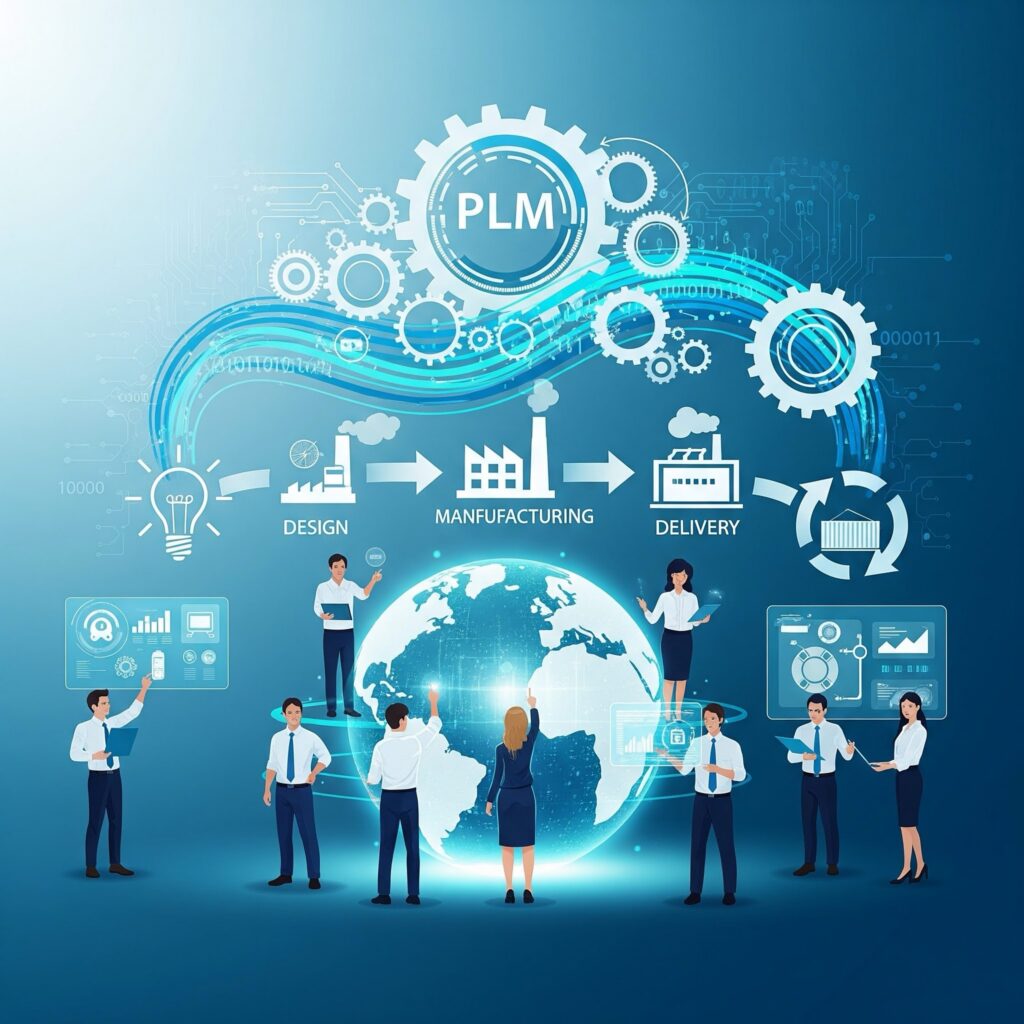

Implementing a Product Lifecycle Management (PLM) system is one of the most significant digital transformations an organization can undergo. It isn’t just a software upgrade; it’s a fundamental shift in how your company creates, manages, and delivers products. To ensure your investment yields the highest ROI, you need a structured approach that balances technology, people, and processes.
1. Strategic Planning and Goal Setting
The foundation of any successful PLM rollout is a clear vision. Without defined objectives, the project risks “scope creep.”
- Identify Pain Points: Where are the bottlenecks? Are you struggling with version control, slow time-to-market, or disconnected global teams?
- Define Success Metrics: Establish what success looks like. This could include a 20% reduction in engineering change order (ECO) cycle times or improved data accuracy across departments.
- Secure Executive Buy-In: PLM affects the entire enterprise. You need leadership to champion the project to ensure resource allocation and cultural alignment.
2. Comprehensive Business Process Assessment
Before you look at software, you must look in the mirror. You cannot automate a broken process and expect it to work.
- “As-Is” vs. “To-Be” Analysis: Map out your current workflows in detail. Identify the gaps and then design the optimized “To-Be” state that the PLM system will facilitate.
- Eliminate Data Silos: Use this stage to identify where data gets stuck—whether it’s in isolated spreadsheets or disconnected CAD folders.
3. Rigorous Requirements Gathering
Your PLM system should fit your business, not the other way around.
- Stakeholder Interviews: Talk to everyone from design engineers to supply chain managers. What do they need the system to do daily?
- Functional vs. Technical Requirements: Distinguish between what the business needs (e.g., automated approvals) and what the IT infrastructure requires (e.g., cloud security protocols).
4. Strategic System Selection
With hundreds of PLM vendors on the market, choosing the right one requires a methodical approach.
- Vendor Evaluation (RFP/RFQ): Use your requirements list to vet vendors. Look for industry-specific experience (e.g., aerospace vs. retail).
- Scalability and Flexibility: Ensure the software can grow with you. A system that works for 50 users should be able to scale to 5,000 without a total overhaul.
5. Data Migration: The “Clean Slate” Strategy
Data migration is often the most underestimated phase of implementation.
- Data Cleansing: “Garbage in, garbage out.” Before moving legacy data into the new PLM, scrub it for duplicates, errors, and obsolete files.
- Attribute Mapping: Ensure that metadata from your old system or CAD files correctly populates the new PLM fields so that searchability remains intact.
6. System Configuration and Customization
The goal should always be to stay as close to “Out-of-the-Box” (OOTB) functionality as possible.
- Configuration: Adjusting the software settings to match your workflows.
- Customization: Writing unique code for specific needs. Use this sparingly, as heavy customization can make future software updates difficult and expensive.
7. Rigorous Testing and Quality Assurance (QA)
Never “flip the switch” without extensive validation.
- Unit and Integration Testing: Does the PLM talk to your ERP? Does the CAD integration work?
- User Acceptance Testing (UAT): Let a group of “power users” test the system in a sandbox environment. Their feedback is vital for catching usability issues before the official launch.
8. Change Management and User Training
A PLM system is only as good as the people using it. Resistance to change is the #1 reason implementations fail.
- Role-Based Training: Don’t give everyone the same manual. A manager needs different training than a design engineer.
- Internal Marketing: Communicate the “Why” behind the change. Show employees how the new system will make their lives easier, not harder.
9. Go-Live and Hyper-Care Support
The first few weeks after launch are critical.
- Phased Rollout: Consider a “pilot” department first rather than a company-wide “big bang” approach.
- On-Site Support: Have a dedicated “hyper-care” team ready to answer questions and troubleshoot issues in real-time to prevent user frustration.
10. Post-Implementation Review and Continuous Improvement
PLM is a journey, not a destination.
- Audit Against KPIs: Six months in, check your progress against the goals you set in Step 1.
- Iterative Updates: Use feedback loops to refine processes and add new features as your team becomes more comfortable with the system.
Final Thoughts
Successful PLM implementation requires a blend of technical precision and human-centric change management. By following this structured roadmap, your organization can break down silos, foster innovation, and build a digital thread that connects your products from initial concept to retirement.